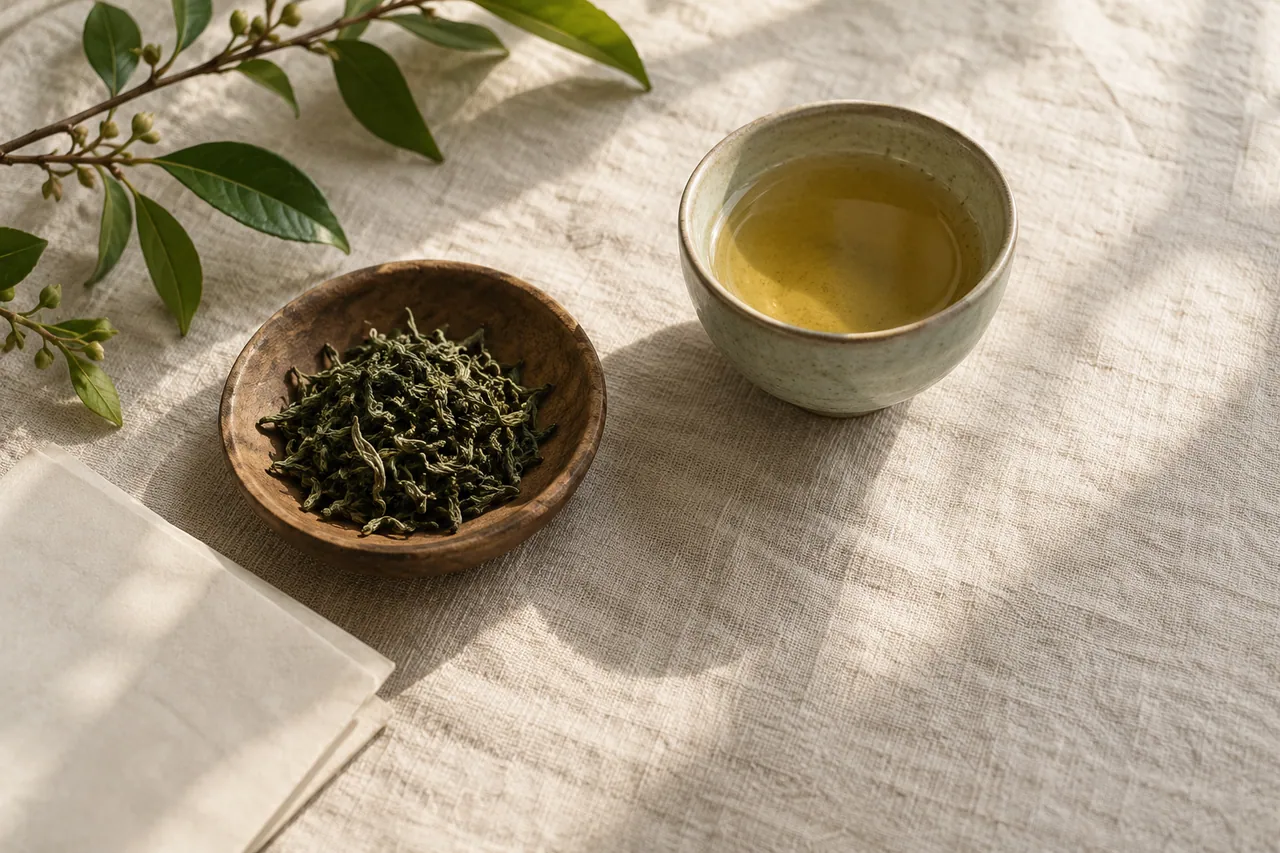
Green tea has a reputation for being difficult. One cup is fresh and sweet; the next seems to have borrowed the bitterness of the entire day. Often, the difference is not an expensive kettle or a special technique. It is simply water that was a little too hot, or leaves that stayed in the cup too long.
The useful thing about making tea at home is that you can change one small thing at a time. Treat the first cup as a conversation with the leaves, rather than a test you have to pass.
Start with a gentler temperature
For many everyday green teas, water around 75–85°C is a useful starting point. More delicate Japanese teas may suit cooler water; some sturdier leaves will tolerate more heat. The instructions that came with your tea are the best place to begin.
If your kettle only boils, pour the water into an empty cup first, then into your brewing vessel. This will cool it, although the exact temperature depends on the vessels and the room. A kitchen thermometer is useful if you want a repeatable result. Guessing is perfectly fine when you are simply finding a cup you enjoy.
Give the leaves some room
A roomy infuser lets the leaves open. A very small tea ball, packed tightly, makes it harder for water to move around them. Start with roughly two grams of tea for a 250 ml cup, then adjust for your taste and the size of the leaves.
Try a short first infusion, around two minutes. Lift the leaves out completely when it is ready. Leaving them in the water while you answer an email is a reliable way to turn a gentle cup into an assertive one.
2 g of leaves · 250 ml of water · about 80°C · 2 minutes. Taste, then change one thing next time.
Follow the flavour, not the rules
If your cup tastes harsh, use cooler water or shorten the brew. If it seems thin, add a few more leaves before you make the water hotter. Taste the tea as it cools: flavours that hide in a steaming cup can become clearer a few minutes later.
Many loose-leaf teas can be infused again. The second cup will not be identical to the first, and that is part of the pleasure. Give it fresh water, try a slightly longer brew, and notice what has changed.
The aim is not a perfect cup in somebody else’s notebook. It is a cup you want to make again.